Food industries face constant challenges with
This guide covers dry ice blasting food, what it involves and when it is the right choice. Food industries face constant challenges maintaining high cleanliness and hygienic standards.
Ancient cleaning methods rely on water and manual scrubbing, which consume much time and demand hard labour. Dry ice blast cleaning is rapidly gaining acceptance as a substitute to traditional industrial cleaning methods. It can quickly eradicate stubborn deposits from processing equipment and production environments.
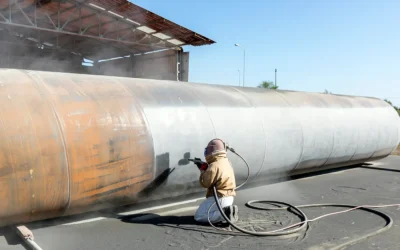
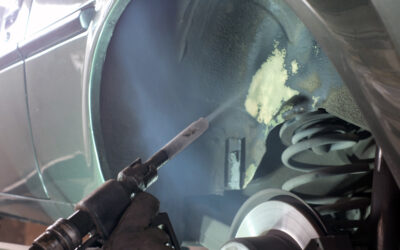
Dry ice cleaning resembles sand and soda blasting. All three methods clean surfaces using media accelerated in a pressurised air stream. However, dry ice cleaning uses solid CO2 pellets or microparticles. Workers accelerate these to high velocities and direct them at the surface. The particles sublimate upon impact, lifting dirt and contaminants without damaging equipment.
Strict regulations in food storage require new solutions
Strict regulations in food storage and preparation have made dry ice blasting food industry applications an essential tool in food factories, packing machines and packing lines. Dry ice removes mildew and mould that commonly appear in food preparation areas. Workers must keep kitchens sanitary. Dry ice removes the source of bacterial growth and prevents food-borne diseases and allergic reactions.
Dry ice is now essential in food storage. Restaurants and supermarkets use dry ice to keep food fresh and to display items in open containers for long periods. This approach has become standard practice, but it can be dangerous. Ensure proper ventilation in relevant areas and avoid direct contact with skin.
Traditional cleaning methods are time-consuming, labour-intensive and expensive. Many facilities cannot afford them. Manual scrubbing with wire brushes, water and chemicals takes long hours to clean. This causes extensive downtime and equipment damage, shortening asset life and reducing productivity. Dry ice blasting food industry operations make the process easier and more precise. Food processing facilities can quickly clean different surfaces and return them to operation immediately.
Why the dry ice blasting food industry relies on this technology
Why dry ice blasting food industry facilities use this technology:-
1. No secondary waste is generated
Industrial surface cleaning with dry ice improves sustainability efforts. The pellets sublimate upon impact with the surface. This means no residue, no secondary waste and no moisture remains.
2
2. Completely non-toxic
Dry ice is colourless, tasteless, odourless and non-toxic.
It eliminates environmentally dangerous cleaning chemicals and reduces worker exposure to hazardous cleaning agents.
3
3. Non-abrasive
Dry ice can clean sensitive electronic equipment very effectively, such as circuit boards, without etching, profiling or changing surface dimensions.
4. Inexpensive
Dry ice cleaning reduces labour costs significantly
Dry ice cleaning reduces labour costs significantly. Workers can complete the job in far less time than conventional manual labour would take. This method produces a cleaner finish even in situations that seem difficult to clean manually.
5. Enhances worker safety
Dry ice cleaning eliminates worker exposure to toxic cleaning materials. The process also eliminates repetitive hand-cleaning, scrubbing, sanding, pounding and scraping activities.
Related reading: The Advantages of Dry Ice Blasting for Electrical and Sensitive Equipment, Restoring Heritage: How Blasting Preserves Historical Structures.